
Physical activity guidelines
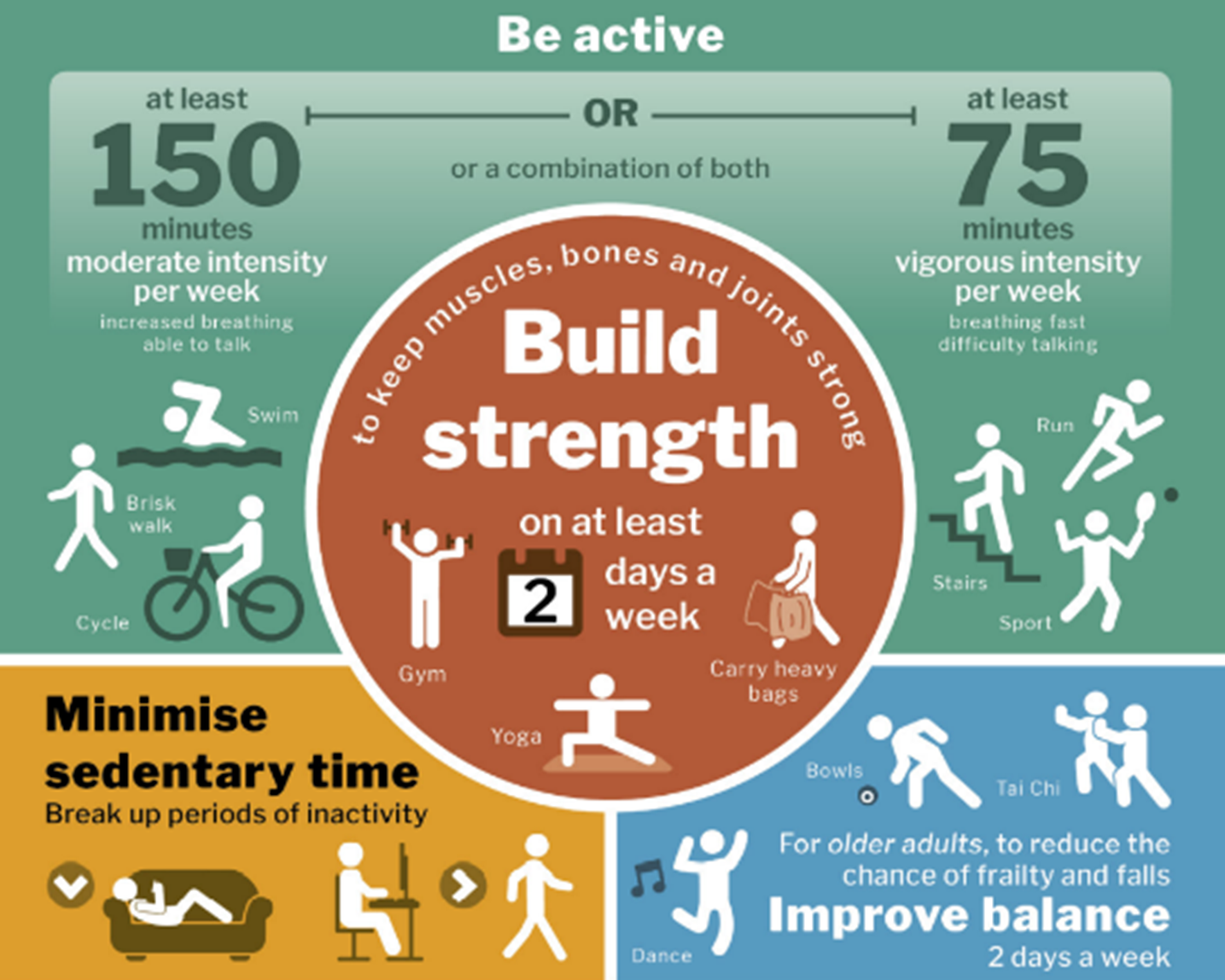
Sit Less and Move More
The average adult sits for more than half their day, for example we sit to eat meals, sit to drive to work or on the bus, sit at a desk at work, sit to watch TV / read in the evenings. The problem with this is that time spent sitting / being sedentary is associated with many healthy problems including obesity, type 2 diabetes, cardiovascular disease, musculoskeletal problems and depression.
Breaking up periods of sedentary time with movement breaks and reducing the overall time you spend sitting can have really positive effects on our health.

Tips for Moving More
- Take the stairs (even if its not all the way)
- Get off the bus a stop early
- Walk / cycle as part of your commute
- Set an alarm to stand and stretch / move regularly
- Standing desk
- Stand for phone calls / meetings
- Record your steps
- Chair based exercises
- Take the kids to the park
- Walk the dog
- Dance to your favourite songs
- Take a walk in your lunch break
- Stand or do chair exercises in the advert breaks
- Make it enjoyable
Cardiovascular Exercise
Cardiovascular exercise is any exercise that increases the heart rate and breathing rate. It has many health benefits including increasing energy expenditure, helping to reduce visceral fat (the fat around your internal organs), improving heart and lung function, improving blood pressure and cholesterol, and enhancing mood.
Try to aim for 30 minutes of moderate intensity exercise or 15 mins of vigorous intensity exercise 5 time a weekly.
Tips for Getting Started with Cardiovascular Exercise
- Choose an activity you enjoy
- Start slowly and build gradually
- Warm up and cool down
- Monitor your intensity
- Set realistic goals
- Track your progress
- Stay flexible
- Mix it up
Examples of Exercise
| Moderate intensity exercises | Vigorous intensity exercises |
|
Walking Swimming Gentle cycling Gardening Hiking Dancing Aqua aerobics |
Jogging / running Cycling up hills Swimming laps Vigorous dancing / aerobics Sports – football, tennis, rugby, netball etc
|
Strength Exercises
Strength exercises are important for all of us but especially when trying to lose weight. Strength training helps to preserve and / or build lean muscle mass which can boost your resting metabolic rate meaning that you burn more energy even when not exercising. They can also help to improve your body composition, reducing body fat whilst increasing muscle mass and are especially important in helping to maintain weight loss in the long term. As well as specific weight loss benefits strength exercises are important for bone, joint and muscle health, reducing pain, supporting healthy aging, boosting mental wellbeing and improving function and mobility.
Aim to do muscle strengthening exercise that exercise all your muscle groups twice a week.
Examples of Muscle Strengthening Exercises
- Body weight exercises
- Weight training
- Resistance bands
- Heavy gardening
- Carrying heavy loads
- Yoga, pilates and tai chi
- Circuit training
Tips for Getting Started with Strength Exercises
- Start simple and gentle
- Focus on good form
- Build up gradually
- Be consistent
- Listen to your body
- Wear loose, comfortable clothing
- Stay hydrated
- Stay motivated
Exercise Snacking
Short on time? Take regular exercise snacks.
Exercise snacking is a way of structuring exercise into short bouts spread throughout the day. It could be 5- 10 mins every few hours during the day, or as little as 1 min at a time every hour (or even more frequent such as in the advert breaks of your program).
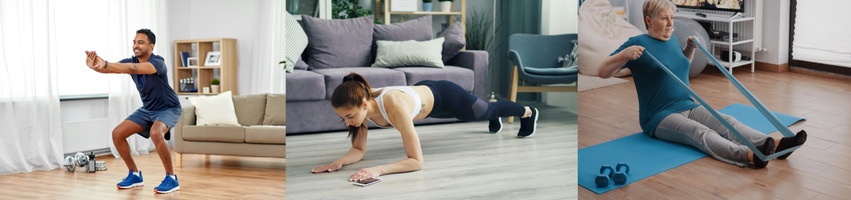
Examples of Exercise Snacks
-
Sit to stand / squats
-
Standing or seated knee bends
-
March on the spot (sitting or standing)
-
Seated leg kicks
-
Calf raises
-
Wall or desk press ups
-
Walking up and down the stairs
-
Keeping a resistance band in your drawer / next to you to do some upper body ex’s
-
Wall sits
-
Plank holds
-
Dance break
Please use the following advice to ensure your safety and enjoyment of trying new exercises. If you have health concerns you consult your doctor before trying new exercises. Please note that Livewell Southwest cannot be responsible for any resulting problems.
- Do not exercise if you feel unwell.
- Discontinue exercises if you start to feel unwell.
- Ensure you have had the appropriate medication prior to starting (e.g. inhalers, pain relief) and if you have diabetes, it is well managed beforehand.
- Do not exercise into pain; discontinue any exercise that exacerbates your pain.
- Stop and rest during exercise as you need to.
- Do not exercise too soon after a meal.
- Wear loose and comfortable clothing and flat, supportive shoes.
- Use a supportive chair when doing seated exercises.
Healthy Eating
Click here for useful links to support your Healthy Eating group sessions.
Food and feelings
Click here for useful links to support your Food and Feelings group sessions.