
We support:
- Over 16s
- Living in Plymouth with a Plymouth GP
- Common Mental Health difficulties such as anxiety & depression
How to access our service:
We encourage you to make a self-referral to our service if you are:
- Experiencing depression anxiety or PTSD.
- 16+ years old.
- Ready to start working on your problems and able to attend regular appointments.
- Registered with a Plymouth GP.
- Not currently receiving support from other mental health services.
Treatments we offer:
- PTSD
- High Intensity CBT
- Low Intensity CBT
- Counselling for Depression
- Employment Support
- LTCs
- Perinatal
- Groups
Plymouth Talking Therapies is not suitable for people:
- Who are a high risk to themselves or others, such as current risk of suicide or serious self-harm.
- Using other mental health services, such as the Community Mental Health Team.
- Who have current or severe and enduring mental health needs and as such require specialist services.
Accessing Support from NHS Plymouth Talking Therapies
At some point, we all feel low, anxious, worried, or depressed. These feelings are completely normal, but they can start to affect how we live our lives, the things we do, and how we feel about ourselves. When this happens, it is important to reach out for support, and we are here to help.
Life can bring many challenges, from stress at work or home to changes in relationships or health. Whatever your situation, you do not have to face it alone. Our Talking Therapies team provides safe, confidential support to help you feel more like yourself again.
We offer a range of evidence-based therapies, delivered in ways that suit you, through group courses, one-to-one sessions, or online support. Our teams are trained and experienced in helping people with common mental health difficulties such as anxiety, depression, and stress.
Make a referral
You can refer yourself if you are over 16 and registered with a GP in Plymouth. You can use our online self-referral form or contact us by phone or email if you need help.
If you are supporting a patient referring themselves (such as admin staff, wellbeing champions and social prescribers), please click the “I am referring myself” button and go through the form with the patient.
If you have any questions about any of the referral routes, please contact us on [email protected] or call 01752 435419
You can also contact us directly:
- Telephone: 01752 435419
- Email: [email protected]
If your GP is outside Plymouth, please contact them to request a referral to your local Talking Therapies service or use this link to find a service near you: NHS talking therapies for anxiety and depression.
We understand reaching out for support can feel difficult. We are here to help you every step of the way.
I am a professional making a referral.
Click here.
How to find us
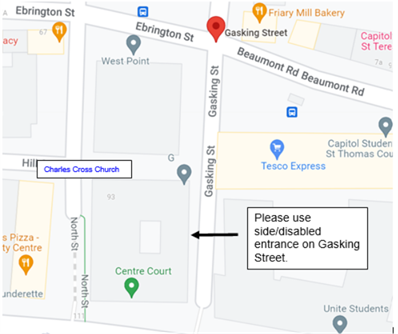
Location: Centre Court, 73 Exeter Street, Plymouth, PL4 0AH (Gaskin Street Entrance)
What3Words: doll.food.amber
Appointments and safety Information
To help your therapy run smoothly and safely, we have a few important guidelines for appointments. These are here to protect both you and our staff, and to make sure you get the most out of your sessions. Please take a moment to read through them — each one has its own dropdown so you can open the details as needed.
What to expect
What is the assessment for?
Your first step is an initial assessment. This helps us understand your current mental health difficulties and how they affect your life. It also allows us to explore whether NHS Talking Therapies is the best place to support you, or whether another service might be more suitable.
You do not need to share anything you are uncomfortable with. The more information you give us, the better we can understand your needs.
As part of our commitment to providing excellent care and maintaining high professional standards, trainee therapists are involved in our clinical work. Trainee therapists may observe (shadow) qualified clinicians or sit in on appointments to support their professional development and the ongoing quality of the service. This plays an important role in developing skilled, safe, and effective practitioners. All trainee therapists are either employed by the service or undertaking a formal training placement and are bound by the same confidentiality, data protection, and professional standards as our qualified staff. If you do not wish a trainee therapist to be present during your appointment, you may opt out at any time by informing your therapist.
What will the assessment look like?
Unless you request a face-to-face appointment, the assessment will be over the phone. If you have specific needs or requirements, you can contact us by calling 01752 435419 Monday to Friday 0900-1700 or emailing [email protected].
During the assessment:
- We will introduce ourselves and check your address and GP details
- The assessment usually takes around 45 minutes, but sometimes longer if needed
- We will help you complete any questionnaires sent by email or post
- We will ask about your safety and wellbeing
- We will ask about your past health and lifestyle
- You will have the opportunity to discuss your main mental health difficulty and the impact it has
- We will talk about what you would like to achieve through treatment
- You can ask questions about the process and ensure you feel comfortable with the support being offered
How can I prepare for the assessment?
We will ask you to complete standard questionnaires about symptoms of depression and anxiety over the past two weeks. There are also questions about how symptoms affect your life, such as work, hobbies, or relationships.
We email these 24-48 hours before your assessment so you can complete them online. If you need help completing them, your therapist will support you during your appointment.
For information about how we keep your data safe and confidential, see our Privacy and Confidentiality page.
What if I am struggling with the assessment?
Talking about difficulties can be hard. Please let us know if you need support. Some ways we can help include:
- Taking a break or having a drink
- Having a family member or friend present
- Receiving information in a clear and concise way
- Requesting adjustments such as large print or support if you are hard of hearing
What happens next?
After your assessment, we will advise you on next steps. You may be put on a waiting list for treatment, referred to another service, or invited to a follow-up appointment if we need to discuss options further.
You will receive a letter summarising the outcome and next steps. A copy of this letter will also be sent to your GP.
Cancellations
Please give at least 48 hours’ notice if you need to cancel an appointment. This allows us to offer your slot to someone else who may be waiting for support, helping us manage demand and make the service accessible to as many people as possible.
Missed appointments
We understand that sometimes life can get in the way of attending your sessions. If you cannot make an appointment, please let us know as soon as possible.
If you miss two appointments, either through cancelling or not attending, your referral may be closed, and you might need to be referred again to continue therapy. Open communication helps us support you and ensures you get the most out of your sessions.
Missed appointments are a significant issue for the NHS, leading to longer waiting times and increased pressure on services. In 2021/22, about 6.4% of outpatient appointments were not attended, equating to around 7.8 million missed appointments across the NHS. Each missed GP appointment costs the NHS approximately £30, which adds up to over £216 million annually.
By letting us know if you cannot attend, you help us free up appointments for others and keep our services running efficiently.
Safety and privacy
For any appointment with NHS Plymouth Talking Therapies, whether by phone or video, it is important that you are in a quiet, private, and confidential space. This helps you feel comfortable sharing personal information and allows the therapist to focus on supporting you fully.
Please avoid public spaces such as shops, buses, beauty salons, public parks, or any place where others might overhear you.
If you are driving or operating heavy machinery, the appointment cannot take place and will be stopped, even if you are using a hands-free device. This is the most common reason appointments are missed, so please give yourself enough time, appointments usually take around 45 minutes.
Choosing a safe environment ensures that:
- Your privacy is protected
- You can speak freely about sensitive issues
- You and the therapist can give the session your full attention
- You are not at risk while completing your appointment
If you’re unsure where to do your appointment, consider a private room at home, a quiet office, or another space where you feel safe and uninterrupted.
Zero tolerance
Livewell Southwest has a zero-tolerance policy towards aggressive, threatening, or abusive behaviour. All staff have the right to work safely and respectfully.
Any incidents of aggression or abuse will be reported to management or, if necessary, the police. This policy helps us maintain a safe and supportive environment for everyone, so that patients and staff can focus on care in a calm and respectful setting.
Risk and safeguarding
Your safety and the safety of others is very important to us. We will check in with you about risk at every session to make sure you are safe and supported.
If we have concerns about your safety or the safety of someone else, we may need to share information with other professionals such as your GP, social services, or emergency services. Whenever possible, we will discuss this with you first.
For more information about how we handle your information, please see our Confidentiality page.
NHS Plymouth Talking Therapies is not an emergency service
When struggling, it is not uncommon for people to have difficult thoughts or feelings of hopelessness.
We are not an emergency service, so it is very important that you seek help from the right sources if you are having thoughts of hurting yourself:
First Response Service via NHS 111 (24/7 mental health crisis line – select the mental health option)
Valued Lives 01209 901438 (7 days a week 5pm-midnight)
Samaritans 116 123 (free from mobile or landline)
SHOUT – 24/7 text service – (Text Shout to 85258)
SANE 4pm-10.30pm 365 days a year – 0300 304 7000
Papyrus – for young adults 0800 068 4141
Campaign against living miserably (CALM) for men – 0800 58 58 58
Childline – 0800 1111
If there is a life-threatening situation you need to contact emergency services on 999 or present at the nearest A&E department (Derriford Hospital).
For all non-emergency medical/mental health interventions please contact your GP during normal working hours.
Livewell’s First Response 24/7 crisis line provides advice, support and signposting for people experiencing mental health difficulties. If you feel worried about your mental health or that of a loved one or a friend, you can call the crisis line via NHS 111 (select the mental health option). Click here to find out more.
You can also phone NHS 111 for urgent medical problems who are open 24 hours, 7 days per week.