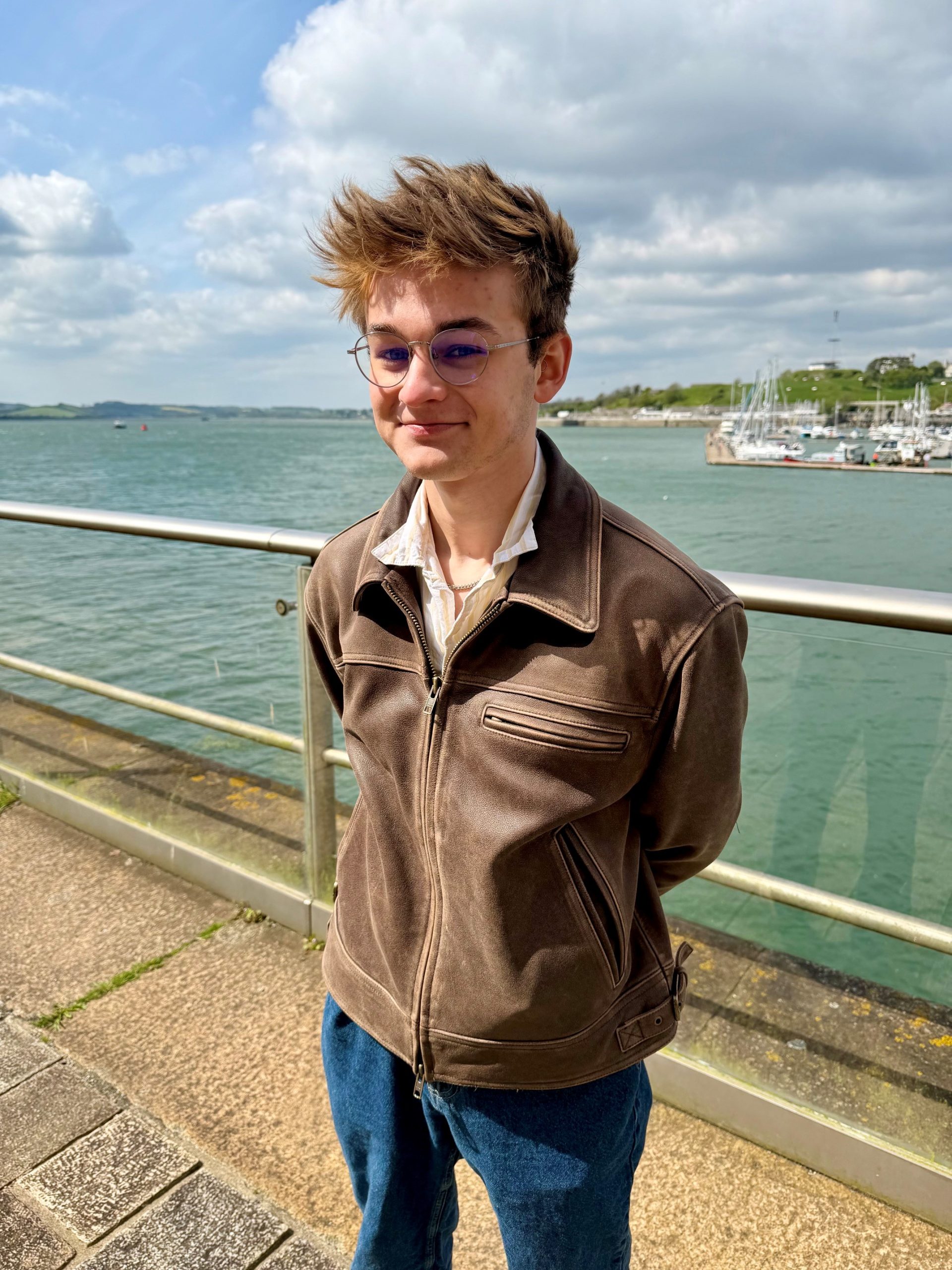


“At my lowest, I wasn’t getting out of bed all day. I wasn’t eating. I wasn’t showering. I couldn’t live. I was hurting the people I loved by withdrawing and giving into some of my compulsions. And it needed to stop.”
That was when 21-year-old Griff referred himself online to NHS Plymouth Talking Therapies run by Livewell Southwest.
It is a free, confidential service for people aged over 16, offering treatment for common mental health conditions. Therapists can help with anxiety, depression, stress, panic attacks, specific phobias, Obsessive Compulsive Disorder (OCD), low self-esteem and Post Traumatic Stress Disorder (PTSD). This is done through Cognitive Behavioural Therapy (CBT) or Eye Movement Desensitisation and Reprocessing (known as EMDR therapy) which is one of the treatments for PTSD.
The service offers counselling for specific problems and people receiving treatment can also take up the offer of support to retain or access employment.
Griff was in his final year at university and was struggling with OCD, anxiety and depression. He had a series of CBT sessions. He remembers: “Each week I would be set a task, for example, to try and reduce compulsive handwashing by a certain amount. I would do that over the week and then each week it would be the sort of things that would be the least anxiety inducing to the things that would be the most anxiety inducing. By the end I was able to handle the stuff that was previously making me so anxious I couldn’t move.”
Cognitive Behavioural Therapist Amy Bray explains: “CBT is a proactive type of therapy, and it is based on the idea that the way that we think affects how we feel, which affects what we do. And we know people can get trapped in vicious cycles which only serves to maintain difficulties and how they are feeling.
“CBT is about teaching you to become your own therapist, teaching you different tools and techniques to break those cycles. If we start to make changes to one of those areas, so potentially like our thoughts, it will have a knock-on effect in other areas.
“Accessing therapy is a brave thing to do. It is very exposing at times and makes people feel quite vulnerable. However, if you are struggling with your mental health, there is nothing to lose, but potentially a lot to gain.”
During his therapy, Griff was also referred to the Employment Service within the Talking Therapies team. This was set up after therapists noticed a lot of people had increased anxiety and depression because they didn’t have a secure job.
Griff got help creating a new CV, applying for jobs and interview techniques from Employment Advisor Daniel Summers. He explained: “Like most people I think Griff was a bit nervous. He was lacking a bit of direction. He just needed someone in his corner to help build his confidence again and give him the right tools to be able to navigate the world of employment.

“I just think sometimes you just need a little bit of support to clear the clouds away and give yourself an opportunity to have a look at things more objectively.”
Within a few weeks, Griff secured a job in retail and was promoted within two months.
Griff said: “I think the routine is the main thing that has been beneficial to my mental health. Instead of sleeping all day, I don’t have the choice. I have got to be in work. I am now in a much healthier place. Day-to-day life has become easy. If I had told myself that two years ago, I don’t think I would believe it, but it is true.”
Anyone over 16 registered with a Plymouth GP can self-refer via the Livewell Southwest website or by calling 01752 435419.
If you live outside of Plymouth, check Talking therapies – NHS for your local service.
Please note: NHS Plymouth Talking Therapies is not an emergency service. If you are worried your mental health is reaching a crisis, please contact the First Response Service (24/7) by calling NHS 111 and selecting the mental health option.
If your situation is an emergency or life threatening, please call 999 or go to the nearest Emergency Department.