
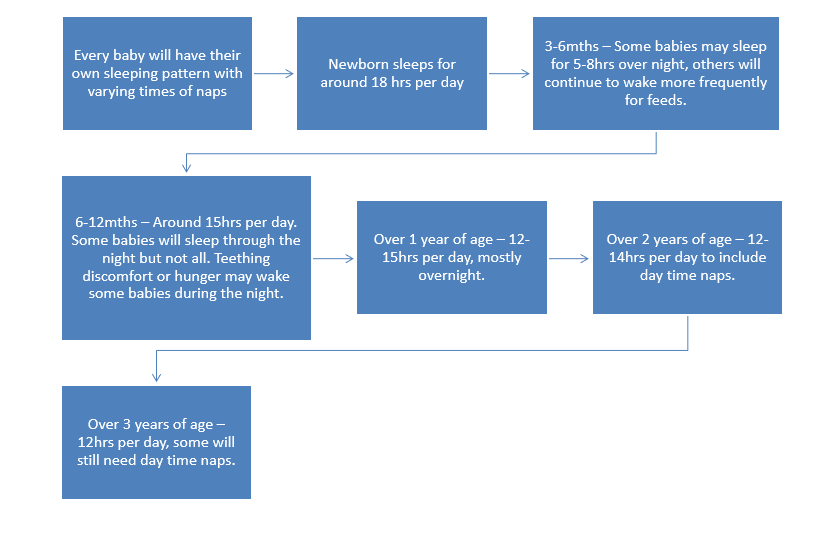
Some babies need more sleep, some less. Every baby is different, so try not to compare yours with others.
As your baby grows, their sleep pattern will change. It can feel as though every time you have settled into a routine, it changes again.
Safer sleep
It’s lovely to have your baby with you for a cuddle or a feed, but it’s safest to put them back in their cot before you go to sleep.
The safest place for your baby to sleep for the first 6 months is in a cot, lying on their back, in the same room as you.
For further information on safe sleep, please visit: Home | The Lullaby Trust
Sleep and young children
Lots of young children find it difficult to settle down to sleep and will wake up during the night.
For some people, this might not be a problem. But if you or your child are suffering from a lack of sleep, there are some simple things you can try.
Every child is different, so only do what you feel comfortable with and what you think will suit your child.
Sleep tips for under-5s
- Make sure you have a calming, predictable bedtime routine that happens at the same time and includes the same things every night.
- If your child complains that they’re hungry at night, try giving them a bowl of cereal and milk before bed (make sure you brush their teeth afterwards).
- If your child is afraid of the dark, consider using a nightlight or leaving a landing light on.
- Do not let your child look at laptops, tablets or phones in the 30 to 60 minutes before bed – the light from screens can interfere with sleep.
- If your child wakes up during the night, be as boring as possible to avoid exciting them and leave lights off.
- Avoid long naps in the afternoon.
For further information, please visit: Sleep and young children – NHS.
Cerebra offer some great information and a free sleep tips booklet to support you with many sleep concerns. Please visit: Sleep Tips – Cerebra.

Contact the team
If you would like to speak to a member of our Health Visitor team, please phone 01752 434008.